Technology careers are among the fastest-growing and most future-proof paths for young professionals today. From artificial intelligence to software development, digital systems to data analytics, the demand for tech skills is reshaping how careers begin and evolve — right from the undergraduate level.
One of the most popular entry points into this evolving ecosystem is the Bachelor of Computer Applications (BCA). But many students finishing Class 12 still ask: What is BCA course all about? What does BCA include? What career opportunities does it open, especially in emerging areas like artificial intelligence?
This blog explains what BCA is, what students learn, and how the degree prepares them for tomorrow’s technology landscape — including trending areas such as BCA artificial intelligence and professional progression points like MCA or specialised tech roles.
What Is BCA?
A Bachelor of Computer Applications (BCA) is an undergraduate degree that prepares students for careers in information technology, software services, systems management, and related digital fields.
At its core, BCA focuses on both foundational and practical aspects of computing — from understanding algorithms and programming languages to building software applications and understanding systems architecture.
In simpler terms, BCA is a bridge between the academic study of computing and real-world tech roles such as software developer, web programmer, database administrator, and systems analyst.
What Does BCA Include?
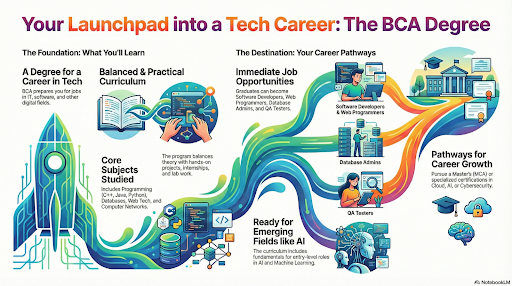
A BCA programme spans three years and balances theory with hands-on exposure. Students typically study:
- Programming Languages: C, C++, Java, Python
- Data Structures & Algorithms
- Database Management Systems
- Computer Networks
- Web Technologies
- Software Engineering Principles
- Operating Systems
- Mobile App Development
- Project Work & Internships
Today, many programmes also include exposure to cloud computing, cybersecurity basics, data science foundations, and artificial intelligence concepts — making the degree better aligned with modern workplace skills.
BCA and Artificial Intelligence (AI)
Artificial intelligence is now an integral part of computing careers. Students often ask: What is BCA AI?
Broadly speaking, BCA Artificial Intelligence refers to BCA programmes that include AI concepts, tools, and applications as part of the curriculum. This could include:
- Introduction to machine learning algorithms
- Hands-on use of AI tools and libraries
- Data preprocessing and analytics
- Predictive modelling fundamentals
- Application of AI in business and engineering problems
These AI-enabled courses help graduates go beyond traditional software roles and give them foundational skills in automation, intelligent systems, and data-driven problem solving — skills that are highly valued across tech sectors today.
Wondering how this applies to you?
Feel free to contact usHow a BCA Degree Supports Technology Careers
A BCA graduate can enter multiple tech pathways, including:
- Software Development – Building applications and systems
- Web & Mobile App Development
- Database & Systems Administration
- Cloud & DevOps Support
- QA & Testing Roles
- Technical Support & IT Services
- Data Analytics & Visualisation
- AI and Machine Learning Associate Roles
Many students also pursue internships and freelance projects during their BCA to build professional experience and portfolios — an approach that often leads to job opportunities even before graduation.
Career Progression After BCA
One of the most common academic progressions after a BCA is MCA (Master of Computer Applications) — a postgraduate degree that deepens technical expertise and prepares students for more advanced technical or managerial roles.
Today, students also pursue:
- Specialised certifications in AI, Cloud, Cybersecurity
- Data science and analytics pathways
- Industry micro-credentials
- Work-linked apprenticeships
The combination of BCA + specialised exposure makes a student highly employable in tech segments that value both foundational knowledge and hands-on capability.
FAQs
BCA is a three-year undergraduate degree in computing and information technology that prepares students for software, systems, and tech careers.
Yes. MCA deepens technical understanding and opens opportunities in advanced development roles, architecture, data science, and systems leadership.
Yes, recognised online BCA and MCA programmes are valid for jobs and professional growth, provided they are accredited and meet national regulatory standards.
Modern BCA students benefit from skills like problem solving, programming, data literacy, cloud basics, AI fundamentals, and collaboration tools.
Yes, BCA graduates with specialised exposure in AI and machine learning can enter entry-level AI support, data preprocessing, or model implementation assistant roles.
Common roles include software developer, web programmer, database administrator, QA tester, IT support specialist, cloud technician, and junior data analyst.
Internships are highly valuable — they provide real-world experience, industry exposure, and networking opportunities that often lead to better job offers.
Absolutely. Many BCA graduates pursue freelance development, software startups, digital services, and consultancy work, building business capability alongside technical skills.
Final Thoughts
In today’s technology ecosystem, a BCA degree is more than an academic qualification — it is a career foundation. It equips students with both conceptual understanding and practical capability, and helps them navigate fast-moving tech fields such as AI, software development, cloud computing, and systems engineering.
Whether you aim for advanced study like MCA, specialised certifications, or direct entry into technology roles, BCA remains a future-relevant launchpad for undergraduate students who want careers that grow with the pace of innovation.